|
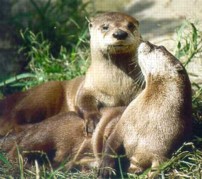
River Otter One of the
animals that can be found in the North American
Taiga is the river otter. The Taiga is an area that
is rocky, a bit icy, and has lots of pine trees.
The climate is cold, rainy, and snowy. There isn't
much sunshine. In addition, there are many varied
species of plants. River otters inhabit areas that
have thick woods, lakes, swamps, rocks, and logs
near grassy areas, streams, rivers, ponds, and
mostly fresh water. River otters can be found from
45û to 66û north latitude and from 120û to 139û
west longitude. The river otter reaches sexual maturity by age two. They mate between February and march. The gestation period is 62-63 days. The female usually bears two kits. The kits are about four to five ounces. When a river otter is born, it is blind and toothless which makes it helpless. The abilities that it has are they take their first steps at seven weeks. The birth of a kit is sometime between January and May. Most of the time, the female raises her young. Kits usually have to ride on their mother's back while swimming. Kits are also taught to swim. Soon the young ones will get used to the water and become great swimming hunters (they are able to catch fish at 16 weeks). The birth interval is one year. The river otter is mainly a social animal. It doesn't migrate. A river is nocturnal and only hunt in the early morning and evening. A river otter is an omnivore. Its typical diet is fish, shellfish, crustaceans, snails, beetles, amphibians, and other small mammals. It's known to be hunted by foxes and wolves. The river otter benefits from its environment using different advantages to avoid danger. It has adaptations such as, the guard hairs to keep it from freezing and using permeable scent glands to mark territory, identify or for defense kind of like a skunk. Today the river otter status is vulnerable. It is endangered in the U.S., but is common in Canada. The river otter can be used as a "symbol of survival for wetlands". Pollution is usually found first in the water, wetlands, and small fish. A river otter can't live where fish aren't healthy and they can't live in polluted waters. If otters are healthy, we can assume there is a safe environment for us as well as them. by Thomas F. 2003
bibliography: Greene, Carol. Reading About the River Otter. Bowling Green State University: Enslow Publishers Inc., 1993. "River Otter" Wildlife Explorer. International Masters Publishers. USA 1998. "Oakland Zoo: North
American River Otter." Redding, Gideon.
"Lutra canadensis, The River Otter Species Digest." Fergus, Chuck,
"River Otter" "The River
Otter"
|